|
|
|
GSE Products
|
Applications;
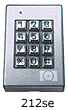
Products;Keypad systems for access by code.
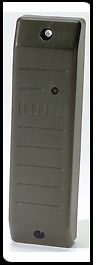
Card reader systems for access by card or key chain device
Single door keypads or "stand alone" are typically used where only a few codes and/or doors are in use. Adding or deleting codes is done through direct programming via the keypad keys. There is usually no event or history log and no time zone control. There are basically three types of stand alone keypads; wired with the electronics enclosed, wired with the electronics mounted remotely and battery operated keypads built into standard lock sets. There is a huge variety of styles depending on usage, weather, mounting and simple esthetics. For example a heavily used keypad like on the main entry of an office building would typically be an environmentally sealed device with metal buttons. For an inner office door a plastic housing with membrane or rubber keys would suffice. There are keypads designed for installation on narrow metal frames, single gang electrical boxes, and gooseneck posts. The list is long. To make sure you get the device that best fits your situation and budget depend on our experts to guide you through the selection.
Multi door keypads use all of the same style of keypads as mentioned above except they are wired to one or more controllers which contain the electronics which control access. These systems become required when there are so many codes or doors in the system that programming is too cumbersome. Wiring them together in a network fashion allows programming and history retrieval by a PC with the manufacturer's software. Other functions not normally offered in stand alone systems are timed control of when codes will work, temporary codes (by days or usage) and integration with other systems.
Single door readers have most of the same attributes as the stand alone keypads as mentioned above. Some have a keypad built in for programming and extra security (code and card), others use some type of portable device for programming. All require some type of electronic credential to be swiped through or otherwise presented to the reader. There are numerous card reader technologies available which determines what the "credential" looks like so to keep it simple we'll call them cards. The majority of cards in use have an internal id number which is communicated to the reader. All of the numbers are unique to the site so any card can be allowed or denied access individually. As with the single keypad system it becomes very hard to keep up with card programming when there is a large volume but the lower cost of these systems make them ideal for smaller projects.
Multi door readers use all of the same style of readers as mentioned above except they are wired to one or more controllers which contain the electronics which control access. These systems become required when there are so many cards or doors in the system that programming is too cumbersome. Wiring them together in a network fashion allows programming and history retrieval by a PC with the manufacturer's software. Other functions not normally offered in stand alone systems are timed control of when cards will work, temporary cards (by days or usage) and integration with other systems.
Card reader technologies for access control are constantly evolving but the basic types in use today have been around for awhile. Magnetic stripe (credit cards) were some of the first used for access control and are still used today. Below is a brief description of the various technologies in use. Magnetic stripe: The main advantage with these cards is people are accustomed to them and they are very inexpensive. The down side is is they don't typically last very long and the reader requires cleaning periodically. Wiegand: Similar to a credit card in size and thickness with a pattern of embedded wires laminated inside the card. The card is swiped through a reader as with the magnetic stripe, however the reader head is not required to touch the card so it does not require any maintenance. Barium Ferrite: These are similar to credit cards in size and thickness but instead of a strip of material on the surface there are pieces laminated inside the card. To activate the reader you place the card onto a stainless steel touch plate. They hold up very well under use and the readers require no maintenance. Proximity: Proximity cards are probably the most used access technology today. The basic card consists of a small rf transmitter and hair thin wire antenna housed in a plastic laminated card the size of a credit card. The popularity is due to the ease of use in that no swiping or placing of the card is necessary. Simply hold the card near the reader to activate it. The "read range" varies depending on the size of the reader and antenna within from 3" to 24". There are 3 styles of proximity cards most manufacturers can supply. The basic card is as described above, thicker than a credit card and not as flexible. A more expensive version is as thin as a credit card and can be carried in a wallet. The last option is a key tag. Slightly smaller than a car alarm remote the key tag is made to carry on your key ring. This is the most robust of the proximity credentials. All of the proximity devices as described are passive devices, there are no batteries. Most manufacturers embed all the electronics of the reader in an epoxy which makes them rugged and weather proof.
|
|
|
 Access control systems come in many forms. From simple push-button locks to
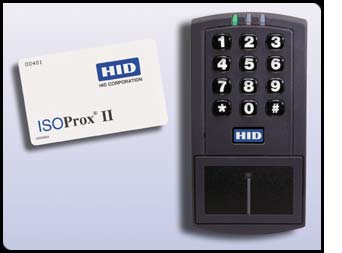 sophisticated proximity based card reader systems. Some are battery operated and require
programming at the door, while others are distributed PC based systems allowing time
control, alarm monitoring, cctv integration and more. G.S.E. can provide the right system at
the right price.
sophisticated proximity based card reader systems. Some are battery operated and require
programming at the door, while others are distributed PC based systems allowing time
control, alarm monitoring, cctv integration and more. G.S.E. can provide the right system at
the right price.